

How Often Should You Replace Gym Clothes? The Ultimate 2026 Guide to Activewear Longevity
Your activewear is a precision performance tool, not just a garment; when that "second skin" fit begins to fail, your entire workout suffers. We've all experienced the frustration of leggings that slide down during a sprint or a favorite sports bra that no longer offers the support you deserve. It's a common dilemma for women living life on the move, wondering exactly how often should you replace gym clothes before they compromise your confidence and performance.
You deserve gear that celebrates your unique silhouette and stands the test of time. In this ultimate 2026 guide, you'll discover the precise signs that your wardrobe has lost its performance edge and learn how to curate a collection of high-performance fabrics that truly last. We'll provide a clear replacement schedule, share expert tips to preserve buttery-soft textures, and help you decide when it's time to upgrade to timeless, durable designs that offer effortless elegance and unparalleled versatility.
Key Takeaways
- Identify the "Sag Factor" and the transparency test to know exactly when your high-waisted leggings have lost their performance magic.
- Learn how often should you replace gym clothes with our definitive roadmap, including the 6 to 12 month limit for high-impact sports bras.
- Discover why investing in premium "second skin" leggings ensures your wardrobe maintains its shape-retention significantly longer than fast-fashion alternatives.
- Master the golden rules of activewear care, such as why you should never use fabric softener if you want to preserve technical fibers.
- Curate a timeless collection of versatile staples that offer effortless elegance while transitioning from your workout to the rest of your day.
The Telltale Signs: When Your Activewear Loses Its Performance Magic
Is your activewear still working for you, or are you working for your activewear? Your workout wardrobe should feel like a partner, supporting every lunge, sprint, and coffee date with effortless grace. Understanding how often should you replace gym clothes starts with recognizing the subtle, and sometimes obvious, signals your gear is sending you. When your clothes stop performing, they stop being a tool for your success and start becoming a distraction.
To better understand the hygiene and maintenance aspect of your workout gear, watch this helpful video from Dr. Jen Caudle:
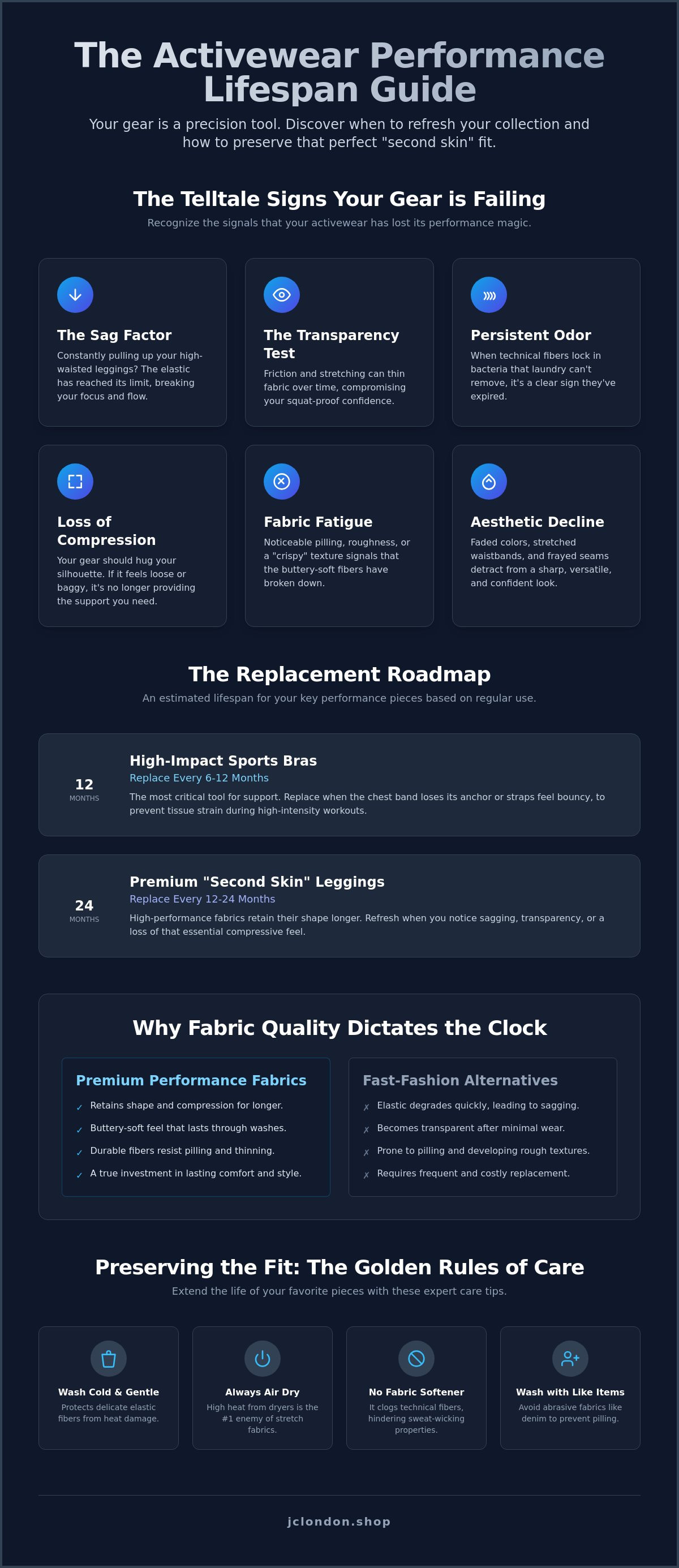
The most frustrating sign of wear is the "Sag Factor." If you find yourself constantly tugging at your high-waisted leggings during a run or a yoga flow, the elastic has likely reached its limit. This loss of tension isn't just annoying; it breaks your focus and ruins your flow. Similarly, the Transparency Test is non-negotiable for any woman on the move. Over time, the friction and stretching of high-intensity workouts thin the fabric. This means your once squat-proof gear may now be revealing more than you intended. Looking back at the history of sportswear fabrics, we see that modern technical blends are far more advanced than their predecessors, yet they still have a finite lifespan.
There is also the issue of "permastink." Synthetic performance fabrics are designed to wick sweat, but they can eventually lock in bacteria and body oils that no amount of specialized detergent will remove. If a persistent gym smell lingers even after a fresh laundry cycle, the technical fibres have reached their expiration date. Finally, watch for a loss of compression. Your gear should hug your silhouette perfectly, providing that "second skin" feeling. When it starts to feel loose or baggy in areas that used to be firm, it's time to refresh your collection with new Second Skin Leggings.
Sensory Signals of Fabric Fatigue
Listen to what your skin tells you. Premium fabrics should feel buttery-soft against your body, but as they age, they often become thin, rough, or "crispy" to the touch. Pilling on the inner thighs is another red flag. It creates friction that can lead to chafing and discomfort during long walks or intense sessions. Fabric fatigue is the microscopic snapping of elastic fibres within the textile structure. Once these fibres break, the garment can never return to its original shape or provide the support you need.
The Aesthetic Decline: From Gym to Street
We believe it's a lifestyle, not just an active wear. A faded pair of leggings that has turned from a crisp, deep black to a dull, washed-out grey ruins the "London-chic" minimalist aesthetic we value. Stretched-out waistbands and frayed seams detract from a sharp, sophisticated silhouette. To maintain that unparalleled versatility, your gear must look as good at brunch as it did during your Pilates session. Don't let worn-out gear dim your confidence. It is time to elevate your activewear and take on your day, your way.
The Replacement Roadmap: Lifespan by Category
Not all activewear is created equal. Your favorite high-intensity sports bra carries a different burden than a lightweight layering top or a pair of lounge-ready shorts. Determining how often should you replace gym clothes depends entirely on the mechanical stress each piece endures and how closely it interacts with your skin. When you understand the specific lifecycle of your gear, you can make informed decisions that protect your body and your budget.
Sports bras are your most critical performance tool, especially during high-impact movement. The technical elastic and supportive structures typically begin to degrade after 6 to 12 months of regular use. Once the chest band loses its ability to anchor firmly or the straps start to feel "bouncy," the garment can no longer provide the necessary support to prevent tissue strain. If you're training for a marathon or hitting HIIT classes four times a week, expect to be on the shorter end of that window.
Premium woman's leggings and gym shorts are built for endurance. When you invest in high-quality "second skin" fabrics, you can typically expect a functional lifespan of 18 to 24 months. These luxury blends are engineered to maintain their opacity and compression through hundreds of movement cycles. Performance tops often enjoy the longest tenure in a wardrobe. A high-quality moisture-wicking tee can easily last 3 years or more because it doesn't face the same constant stretching as compression gear. However, keep a close eye on your technical socks. These are the unsung heroes that often fail first; look for "cushioning collapse" where the padded zones under the heel become thin and lose their shock-absorbing properties.
High-Impact vs. Low-Impact Gear Cycles
Your workout intensity directly dictates the clock. Running leggings face constant friction and high-velocity movement, causing them to wear out significantly faster than gear reserved for restorative yoga or Pilates. Sweat acidity also plays a silent but destructive role. The chemical composition of your perspiration can slowly break down elastane fibres over time. If you're a daily "mover," your replacement cycle will naturally be more frequent than someone who follows a more relaxed weekly routine.
The "Rotation Rule" for Longevity
The secret to making luxury fabrics last is never wearing the same piece two days in a row. Owning a curated capsule of 3 to 5 high-quality leggings allows the technical fibres at least 24 hours to "snap back" to their original shape. This resting period is essential for maintaining that precision fit that hugs your unique silhouette. We recommend browsing our Second Skin Leggings collection to build a versatile rotation. Elevating your essentials ensures you never have to compromise on style or support. You can view our full collection to find the pieces that will keep your performance at its peak.
Luxury vs. Fast Fashion: Why Fabric Quality Dictates the Clock
Why do some leggings feel like a supportive hug while others feel like a restriction? The answer lies deep within the technical composition of the fabric. Many generic brands rely on basic polyester that lacks the "memory" needed to recover after a strenuous workout or a high-heat wash. In contrast, premium Lycra blends are engineered for resilience and recovery. This material science directly dictates how often should you replace gym clothes; while a fast-fashion pair might lose its shape within weeks, luxury activewear maintains its shape-retention up to three times longer.
You might wonder why you should spend more if you eventually have to replace the garment anyway. Think of it as a cost-per-wear investment. A pair of Second Skin Leggings that remains squat-proof and supportive for two years offers far better value than replacing five pairs of thinned-out, sagging alternatives in the same timeframe. Investing in quality that lasts isn't just about the fabric; it's about the internal confidence that comes from gear that never lets you down. When your gear moves with you rather than against you, your focus stays where it belongs: on your strength.
The Anatomy of Premium Stitching
Standard seams are prone to unraveling under the stress of a deep squat or a long run. High-end construction utilizes flatlock seams that sit flush against your skin to eliminate chafing while surviving over 100 wash cycles without a single pop. High-waisted designs with reinforced waistbands are another hallmark of luxury. These technical details prevent the frustrating "roll-down" that plagues cheaper gear, maintaining a sharp silhouette. Additionally, advanced sweat-wicking technology does more than keep you dry; it prevents the "fibre rot" caused by trapped moisture, ensuring your sport bras & tops stay fresh and functional for years.
Sustainability and the Minimalist Wardrobe
Our "less is more" philosophy is built on the belief that a few perfectly crafted pieces are better than a closet full of fast-fashion trends. Choosing timeless, neutral tones allows your wardrobe to transition seamlessly from a yoga session to errands or lunch with friends. This effortless elegance is the core of London-inspired chic. Durability is the ultimate form of sustainable fashion. By choosing pieces that don't end up in a landfill after six months, you're making a conscious choice for the planet. It’s a lifestyle, not just an active wear. Elevate your activewear with pieces that respect both your body and the environment. Take on your day, your way.
Preserving the Fit: How to Make Your Gym Clothes Last Longer
Your investment in premium activewear deserves a care routine that matches its quality. While we've discussed how often should you replace gym clothes, the real secret to longevity lies in your laundry room. Heat and harsh chemicals are the primary enemies of technical fibres. They strip away sweat-wicking capabilities and melt the delicate elastane that provides your "second skin" fit. If you want your gear to move and stretch with you for years, you must treat it with the same respect you give your skin.
The Golden Rule is simple: never use fabric softener. Softeners leave a waxy film that clogs the pores of high-performance fabric, effectively killing its ability to breathe and wick moisture. Stick to cold washes. High temperatures cause synthetic fibres to become brittle and lose their snap-back memory. When it comes to drying, the tumble dryer is a deal-breaker. The intense heat destroys the integrity of the waistband and the delicate support of your sports bra. Always air dry your gear to maintain that precision silhouette and effortless elegance.
How you store your clothes matters too. Heavy leggings should be folded rather than hung. Hanging puts constant stress on the waistband, leading to permanent stretching over time. Tops and lightweight jackets can be hung, but ensure you use padded hangers to avoid those unsightly shoulder bumps that ruin a minimalist look.
The Ultimate Activewear Laundry Routine
Start by turning every piece inside out. This protects the buttery-soft outer finish from pilling and ensures the detergent reaches the areas where sweat and oils accumulate. Use mesh laundry bags for your most delicate items, including your sport bras and grip socks. This prevents straps from tangling and protects specialized grips from abrasive friction. Opt for a mild, pH-neutral detergent specifically designed for synthetics to keep your gear looking and feeling like new.
Reviving "Tired" Gear
Can you save saggy leggings? If the elastic fibres have snapped, the damage is permanent. No amount of cold water will restore a waistband that has lost its tension. However, you can revive gear that has developed a "permastink" by using a 30-minute soak in one part white vinegar to four parts cold water before washing. This breaks down stubborn bacteria and oils. When a piece finally loses its performance edge, transition it to "loungewear only" status for slow Sundays. Ready to refresh your rotation with gear that lasts? Shop our latest high-performance arrivals to experience unparalleled durability. It’s a lifestyle, not just an active wear.
Elevate Your Activewear: Curating Your Next Performance Collection
Tired of staring at a drawer full of gear that has lost its spark? There is a profound psychological shift that happens when you step into a fresh, high-performance outfit. It isn't just about aesthetics; it's about the surge of motivation and the internal confidence that comes from knowing your gear is as capable as you are. Once you've mastered the signs of how often should you replace gym clothes, the transition from "making do" to curating a luxury collection becomes an act of self-care. You deserve a wardrobe that celebrates your strength and moves with your unique silhouette.
Many women find that while their older leggings still "function" for a quick home workout, they no longer pass the test for a day in the city. This is where the lifestyle transition fails. Worn-out fabrics lose their crispness and depth of color, making them look like "gym only" clothes rather than versatile fashion pieces. By investing in premium, durable staples, you ensure your look remains sophisticated whether you're finishing a Pilates session or meeting friends for lunch. This effortless elegance is what defines our community of movers.
The JC London Essential Checklist
Building a modern active wardrobe starts with a solid foundation. Our "Second Skin" leggings are the essential starting point; they provide the precision fit and buttery-soft feel that every woman needs for a life on the move. To create a cohesive, luxury look, focus on pairing these with supportive Sport Bras & Tops that offer both technical compression and high-fashion appeal. Don't overlook the details. Adding the finishing touch with designer women’s sport socks ensures you have the cushioning and style needed to take on your busiest days.
Living Life on the Move
Embracing a London-inspired chic aesthetic means choosing timeless designs that offer unparalleled versatility. We don't just sell products; we're building a community of real women who value balance and individuality. When you wear gear that makes you feel stylish and capable, you're more likely to stay consistent with your wellness routine. Share your style journey and connect with others who appreciate quality that lasts. Remember, it’s a lifestyle, not just an active wear. When you understand how often should you replace gym clothes to maintain peak performance, you're empowered to make choices that support your long-term goals. Elevate your activewear and take on your day, your way.
Step Into Your New Performance Era
Your workout gear is a direct extension of your ambition. Once you recognize the signs of fabric fatigue and understand the roadmap for how often should you replace gym clothes, you gain the power to maintain peak performance every single day. Don't settle for sagging waistbands or thinned-out fabrics that dim your confidence. By choosing premium materials and following a mindful care routine, you ensure your wardrobe remains as resilient as your spirit. High-quality gear doesn't just support your body; it empowers your mindset.
Investing in pieces that hug, move, and stretch with your unique silhouette is a commitment to your wellness routine. You deserve the effortless elegance of a wardrobe that transitions from a high-intensity session to a chic city lunch without missing a beat. Experience the indulgence of a luxury second-skin fit and advanced sweat-wicking performance fabric designed specifically for the woman on the move. Our London-inspired chic designs are crafted to last, ensuring you always look as capable as you feel.
Elevate your activewear with the JC London Second Skin collection and embrace a higher standard of durability today. It’s a lifestyle, not just an active wear. Take on your day, your way.
Frequently Asked Questions
How do I know if my sports bra has lost its support?
Your sports bra has lost its support if you notice the band riding up your back or the straps sliding during movement. A precision fit should feel secure and anchored. If you experience more "bounce" than usual during high-impact sessions, the technical elastic has likely reached its limit. This usually happens every 6 to 12 months. Once the structural integrity fails, it can no longer protect your tissue or provide the physical comfort you deserve.
Is it okay to wear the same leggings two days in a row?
It is best to avoid wearing the same leggings two days in a row. Technical fibres require at least 24 hours to rest and "snap back" to their original shape. Rotating your gear is a key factor in how often should you replace gym clothes because it prevents the elastic from being permanently overstretched. Giving your "second skin" leggings a day off ensures they maintain their shape-retention and supportive hug for much longer.
Why do my gym clothes still smell after washing?
Gym clothes often smell after washing because synthetic performance fabrics can trap bacteria and body oils deep within their technical fibres. This is known as "permastink." While a white vinegar soak can help, a lingering odor is often a sign that the sweat-wicking technology has been compromised. If your gear doesn't feel fresh after a cold wash, the fabric has likely reached the end of its functional life and needs replacing.
Can I put my high-waisted leggings in the dryer?
You should never put your high-waisted leggings in the dryer. The intense heat melts the delicate elastane fibres that provide that essential "second skin" fit and compression. Tumble drying causes your gear to become brittle, leading to sagging waistbands and thinned-out textures. To preserve the effortless elegance and durability of your collection, always air dry your activewear. This simple step significantly extends the lifespan of your high-performance fabric.
What is the "transparency test" for squat-proof leggings?
The "transparency test" involves performing a deep squat in front of a mirror under bright, natural light to check for opacity. If you can see your skin or the color of your underwear through the fabric, your leggings are no longer squat-proof. This thinning happens over time as technical fibres are stretched and laundered. When gear fails this test, it's a clear signal that your wardrobe has lost its performance edge and confidence-boosting power.
How many pairs of workout leggings should I own?
Owning 3 to 5 pairs of high-quality leggings is the ideal foundation for a modern, minimalist wardrobe. This number allows for a healthy rotation, giving each pair time to recover between wears. A curated capsule of versatile staples ensures you always have gear that transitions effortlessly from the gym to errands. Quality matters more than quantity; investing in a few premium pairs is more sustainable than buying frequent fast-fashion replacements.
Do expensive gym clothes actually last longer than cheap ones?
Premium gym clothes absolutely last longer because they utilize superior Lycra blends and reinforced stitching that resist sagging and pilling. While fast-fashion alternatives might seem affordable, they often lose their shape within weeks. Luxury activewear is engineered to maintain its precision fit and support for up to three times longer. When considering how often should you replace gym clothes, investing in quality that lasts offers a much better cost-per-wear and protects your performance.
What should I do with my old, worn-out gym clothes?
When your gear no longer meets the demands of high-intensity movement, you can transition it to "loungewear only" status for slow Sundays. If the fabric is too worn for lounging, look for textile recycling programs that repurpose synthetic fibres into new materials. Repurposing is a sustainable way to handle the end of a garment's lifecycle. Never let old gear hold you back; once a piece loses its magic, it is time to elevate your activewear.


