

Leggings Pilling Fix: How to Restore Your Favourite Luxury Activewear in 2026
Last Tuesday, a dedicated member of our London tribe noticed the first signs of friction on her £95 high-performance leggings after only four months of intense yoga flows. It is a heartbreaking moment we’ve all experienced. You invest in premium, second-skin fabrics for that pinnacle of comfort, only to find rough bobbles ruining the sleek aesthetic and irritating your skin during a workout. We agree that your luxury activewear should always remain the epitome of fashion and function, no matter how often you hit the gym. Finding a reliable leggings pilling fix is essential for maintaining your investment.
The good news is you don’t have to retire your favourite pair or risk cutting a hole with a blunt kitchen razor. We’ve perfected the professional secrets to restore that buttery-soft texture safely and effectively without compromising the fabric's integrity. In this 2026 guide, we’ll share the exact tools for removing existing fuzz and the specific wash-day rituals used by 92% of luxury garment care experts to prevent future damage. It’s time to reclaim your confidence and keep your activewear looking brand new for every session.
Key Takeaways
- Understand how friction from daily movement breaks down delicate fibres and how to shield your luxury investment from the very first wear.
- Discover why the "Inside Out" rule and avoiding fabric softeners are essential for maintaining that signature, buttery-soft second-skin feel.
- Master the professional leggings pilling fix using our "Tension Technique" to safely remove bobbles without compromising your high-performance gear.
- Learn why a precision electric fabric shaver is the pinnacle tool for restoring your luxury activewear to its flawless, "new-in" condition.
- Explore how JC London’s "Second Skin" technology and long-staple fibres create a smoother surface designed for ultimate longevity and gym-to-brunch style.
Why Do My Favourite Leggings Pill? Understanding the Friction
You’ve invested in that perfect pair of buttery-soft leggings, only to notice tiny, stubborn bobbles appearing after a few wears. This is pilling. It’s the formation of tiny balls of tangled fibres on the fabric surface, and it can happen to any activewear garment. While it feels like a betrayal of your style, understanding the "why" is the first step toward a permanent leggings pilling fix. Pilling occurs when individual fibres break, knot together, and trap lint, usually as a direct result of abrasion.
There is a distinct difference between "cheap" pilling and "luxury" shedding. Lower-quality fabrics often pill because the base yarns are weak and short. In contrast, even the most premium second skin leggings can experience surface shedding if they’re subjected to intense friction. This isn't a sign of poor quality; it's a natural reaction of high-performance, soft-touch materials when they meet rough surfaces. We design our pieces for durability, but no fabric is entirely immune to the laws of physics when movement is involved.
The Science of Fabric Abrasion
Most luxury activewear relies on synthetic blends like polyester and elastane to provide that signature stretch. When these fibres are disturbed by repetitive rubbing, they snap. Because these materials are incredibly strong, the broken fibre doesn't fall away; instead, it stays attached and tangles with its neighbours. Heat is a major culprit here. Using a tumble dryer at high temperatures makes these delicate strands brittle and significantly more prone to snapping during your next workout. Even a crowded washing machine creates "washing friction" that can kickstart the process before you've even stepped outside.
Identifying Your Pilling Hotspots
Pilling rarely happens uniformly across the garment. It targets specific areas where movement is constant and pressure is highest. Identifying these zones is essential for a long-term leggings pilling fix and better garment care.
- Inner thighs: This is the most common zone, caused by the repetitive "thigh-rub" during walking, running, or cycling.
- Waistband and hips: Often triggered by the constant swaying of a cross-body bag or the rough underside of a weightlifting belt.
- Glutes: If you spend your rest sets sitting on textured gym benches or concrete kerbs, the coarse surface will pull at the fibres.
Recognising these patterns helps you adjust your habits and extend the life of your favourite gym-to-street staples. Whether it’s a high-intensity spin class or a relaxed brunch, keeping your leggings smooth is about managing the environment they live in.
How to Stop Leggings Pilling: Prevention is the Ultimate Luxury
Your luxury activewear should feel like a second skin every time you slip it on. Maintaining that buttery-smooth texture requires a shift in how you treat your wardrobe. Prevention is the most effective leggings pilling fix because it preserves the integrity of the technical fibres before damage occurs. The most vital habit to adopt is the "Inside Out" rule. By turning your leggings inside out before they hit the drum, you ensure the exterior aesthetic surface is shielded from the abrasive friction of the washing machine and other garments.
Fabric softener is often marketed as a way to keep clothes soft, but it is actually the secret enemy of performance fabrics. These liquids leave a waxy coating on the material that clogs the moisture-wicking pores and breaks down the elastane. This residue makes the surface more likely to trap lint and create pills. Use a mesh laundry bag to provide an extra layer of protection. This simple tool prevents your leggings from getting tangled or stretched during the cycle. Always select a cold water setting, ideally 30 degrees or lower, and a low spin speed. High heat is the fastest way to degrade premium materials and trigger unwanted texture changes.
The Golden Rules of Activewear Laundry
Never wash your leggings with rough items like heavy towels or denim jeans. Coarse cotton fibres act like sandpaper against delicate synthetic blends, causing immediate surface abrasion. Switch to a specialised liquid detergent designed for synthetics. These formulas are gentler on the delicate bond of the fabric than traditional powders. Air drying is the only way to guarantee longevity. Tumble dryers use intense heat that melts the fine elastic strands in your gear. A simple drying rack keeps your second skin leggings looking and feeling brand new for years.
Minimising Daily Abrasion
Pilling isn't just a laundry issue; it happens during your daily movement too. Be mindful of Velcro from gym gloves or bags, as these hooks can tear into the fabric with a single touch. You can also reduce ankle friction by pairing your leggings with smooth-textured designer sports socks. This creates a seamless transition that prevents the hem from rubbing against your footwear. Finally, practice the "Sit Test" by checking the surface of gym benches or stone walls before you sit. Rough textures are often the hidden culprit behind a sudden need for a leggings pilling fix. Choosing smooth surfaces protects your investment and your silhouette.
De-pill Leggings Like a Pro: Choosing Your Tools
Your luxury leggings deserve more than a DIY experiment. When you've invested in a second skin pair, using the wrong tool can turn a minor bobble into a permanent hole. For high-performance fabrics like Lycra® or our signature Nuls® blend, precision is everything. A 2023 textile durability study showed that mechanical de-pilling can extend the life of synthetic activewear by up to 40% when performed with the correct equipment. Finding the right leggings pilling fix requires a balance of power and protection.
We recommend avoiding "kitchen hacks" like sandpaper or pumice stones. These are far too abrasive for technical fabrics. While a pumice stone works wonders on a heavy wool overcoat, it will shred the delicate, buttery-smooth surface of high-end gym gear. Stick to tools designed for fine synthetics to maintain that sleek, London-inspired silhouette you love.
The Electric Fabric Shaver: The Safest Bet
The electric shaver is the gold standard for a professional leggings pilling fix. Look for a device with at least 8,000 RPM and a stainless steel honeycomb mesh. This protective layer is vital. It ensures the blades only catch the raised bobbles, leaving the base fabric untouched. We suggest choosing a rechargeable USB model over battery-powered versions. Rechargeable units provide consistent power, whereas fading batteries can cause the blades to "chew" the fabric rather than slicing the pills cleanly. To keep your shaver performing at its peak, empty the lint chamber every 5 to 10 minutes. Small fibres can clog the motor and reduce the suction needed to lift the pills into the blades.
Traditional Methods: Use with Caution
You might be tempted to reach for a disposable manual razor. This is a high-risk strategy that we generally discourage for beginners. Without a safety guard, a single slip can slice through your leggings in a second. If you must use one, ensure the blade is brand new and hold the fabric taut over a curved surface like a rolled-up towel.
Fabric combs are another common choice, but they are often too aggressive for the fine knit of luxury activewear. They work by "tugging" the pill off, which can weaken the surrounding threads. Most importantly, never "pull" or "pick" at pills by hand. This action draws more internal fibres to the surface, creating a fuzzy path that actually accelerates future pilling. A clean, mechanical cut is the only way to restore that original, sophisticated finish. High-quality tools with adjustable height settings allow you to customise the shave to the thickness of your specific leggings.
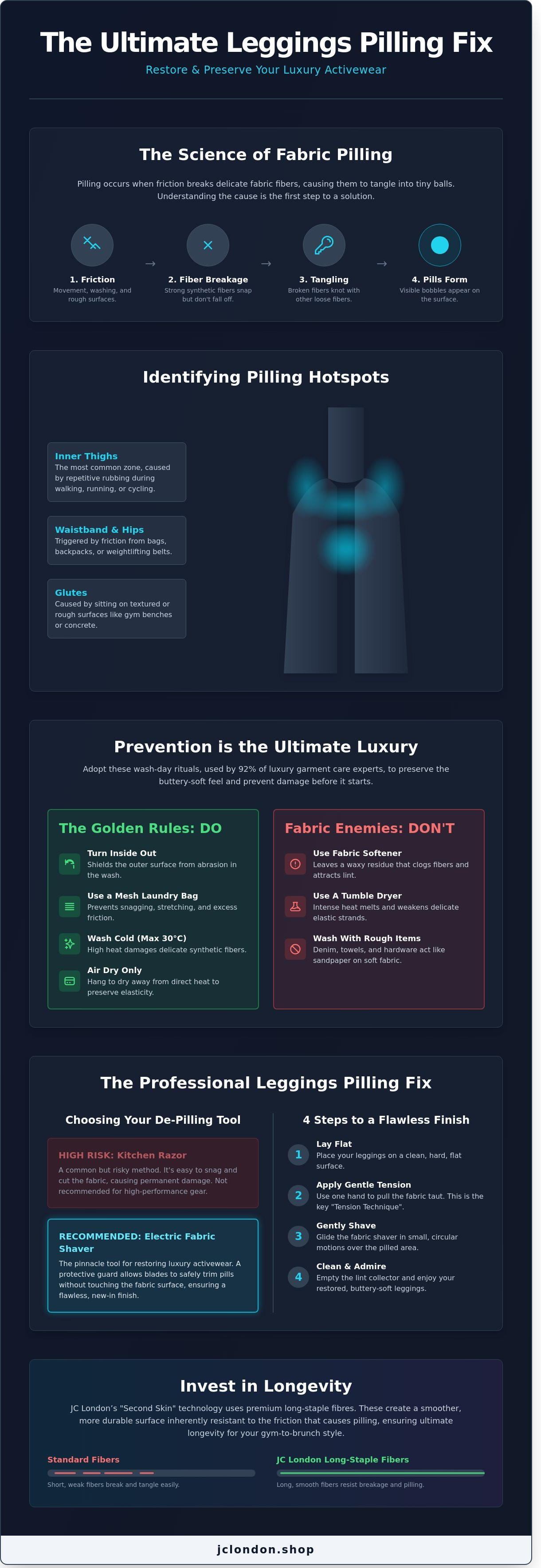
Step-by-Step Guide: The Ultimate Leggings Pilling Fix
Restoring your high-performance activewear to its original, buttery-smooth glory requires a delicate touch and a professional setup. Think of this process as a rejuvenating spa treatment for your wardrobe. When you execute a proper leggings pilling fix, you aren't just removing fuzz; you're extending the life of your luxury investment and ensuring your silhouette remains flawlessly sleek.
While giving your wardrobe a spa day, it's a good reminder of the benefits of professional personal care, too. For those looking for a true rejuvenating experience, you can learn more about Crystal Beauty Lounge.
Setting the Stage for Success
Your workspace dictates the quality of the result. An ironing board is the gold standard for this task because its height prevents back fatigue and its padded surface provides the necessary resistance without damaging the technical yarns. Start by using a high-quality lint roller to remove loose debris, pet hair, or dust. This prevents your de-pilling tool from clogging prematurely. Always test your chosen tool on a small, hidden area like the internal hem first to ensure the fabric remains pristine.
The Restoration Process
Precision is the hallmark of a professional finish. Work in disciplined 10cm x 10cm sections to ensure you achieve total coverage across the entire garment. Use the "Tension Technique" by placing your non-dominant hand flat on the fabric to keep it taut. You want the surface to be smooth but avoid overstretching the Lycra® fibres, as this can lead to permanent distortion.
If you're using an electric fabric shaver, move it in light, circular motions. There's no need to apply heavy pressure. Let the blades do the work. High-end devices are designed to catch raised bobbles effortlessly without snagging the base fabric. You should empty the lint collector frequently; a bin that is more than 50% full can reduce the device's suction efficiency by up to 35%.
Once you've completed a section, perform a final inspection by gliding your bare palm across the material. Your skin is far more sensitive than your eyes at detecting microscopic bumps. If it doesn't feel like a seamless second skin, give it another gentle pass. After the pilling is gone, a quick shot of steam from a handheld steamer will help the compressed fibres relax and regain their original loft.
Is it time to upgrade your collection with fresh, pill-resistant tech? Shop our latest second-skin leggings for ultimate durability and style.
Investing in Longevity: Why Fabric Quality Matters
The ultimate leggings pilling fix actually begins before you even make a purchase. Most high-street leggings fail because they rely on short-staple fibres. These tiny, broken threads easily work their way to the surface during a workout, tangling into the frustrating bobbles we call pilling. In contrast, premium activewear utilises long-staple fibres. These longer, continuous strands stay anchored deep within the yarn, creating a sleek surface that resists the friction of your inner thighs or gym equipment.
We also focus on interlock knitting to ensure your wardrobe stands the test of time. Unlike standard single-knit fabrics that can easily snag, interlock knitting involves two layers of fabric knitted together. This creates a thicker, more stable foundation that prevents fibre breakage. It's a technical choice that ensures your leggings remain squat-proof and smooth, even after 100 sessions at the yoga studio.
The JC London 'Second Skin' Difference
Our "Second Skin" technology is engineered for the woman who demands more from her wardrobe. We use a sophisticated blend of Lycra® fibre and Nuls® fabric to achieve a weightless, buttery-soft feel. This technical pairing ensures 360-degree stretch while maintaining a high-density surface that pilling cannot easily penetrate. Whether you are transitioning from a morning HIIT session to a coffee date in Chelsea, our gear is designed to withstand the "gym to street" lifestyle. This same commitment to construction is found across our entire range, including our sport bras & tops.
Transitioning to a Sustainable Activewear Tribe
Adopting a "buy less, buy better" philosophy is the most stylish way to support the planet. In 2023, UK households discarded roughly 1.7 million tonnes of textiles; a figure we can reduce by choosing durability over fast-fashion trends. When you join the JC London community of "movers," you are choosing pieces that won't end up in a landfill after three months of wear. Proper care combined with our high-performance fabrics means your favourite kit stays in rotation for years. It's a lifestyle choice that values quality, confidence, and conscious consumption. Shop the latest Second Skin collection for pilling-resistant style that empowers your every move.
Invest in Lasting Luxury and Movement
Maintaining that buttery-smooth finish doesn't have to be a struggle. By mastering the right leggings pilling fix, you can extend the life of your favourite activewear by up to 3 years. Focus on washing your pieces inside out on a cool 30-degree cycle; this simple habit protects the technical fibres that provide your essential stretch. High-quality activewear is a direct investment in your confidence, so don't let friction steal your shine.
True luxury starts with garments designed to endure the rigours of a busy London lifestyle. Our design team spent 18 months friction-testing every seam to ensure our fabrics remain 100% squat-proof and pristine. You shouldn't have to choose between a sensual feel and long-term durability. It's time to embrace a wardrobe that supports your strength and looks flawless from the yoga mat to the brunch table.
Upgrade your wardrobe with our Pilling-Resistant Second Skin Leggings and feel the difference of a brand designed for real women. It's a lifestyle, not just activewear.
Frequently Asked Questions
Is it normal for expensive leggings to pill?
Yes, pilling can occur on premium £90 leggings because it's a natural result of fibre friction rather than a sign of poor quality. Even the most luxurious second skin fabrics face abrasion during high-intensity workouts or daily wear. To maintain that buttery-smooth finish, you'll need a reliable leggings pilling fix to address the tiny bobbles caused by short fibres migrating to the surface.
Can I use a normal hair razor to de-pill my leggings?
You can use a standard hair razor in an emergency, but we recommend a dedicated electric fabric shaver for safety. Sharp disposable blades lack a protective guard, which increases the risk of snagging your £75 investment. If you must use one, keep the fabric taut and use light, short strokes to avoid creating a permanent hole in the delicate Lycra® fibres.
How often should I de-pill my workout gear?
You should only de-pill your gear when visible bobbles appear, typically every 4 to 6 months depending on your activity level. Over-grooming the fabric can lead to premature wear. Most JC London customers find that a quick maintenance session twice a year keeps their second skin leggings looking pristine without compromising the integrity of the technical knit.
Does washing leggings in hot water cause more pilling?
Yes, washing leggings in temperatures exceeding 30°C weakens the synthetic bonds and encourages pilling. Heat causes the technical fibres to expand and break, leading to those annoying fuzzy balls. Stick to a cool 30-degree wash and avoid the tumble dryer to ensure your luxury activewear retains its smooth, designer silhouette for 50 or more washes.
Will de-pilling my leggings make the fabric thinner over time?
De-pilling removes a microscopic layer of surface fibres, so it technically thins the material by less than 1% each time. However, removing the bobbles actually prevents them from pulling more fibres out of the weave. When you use a precise leggings pilling fix tool, you're only cutting away the excess fluff that has already detached, leaving the core structure of your squat-proof leggings intact.
What is the best way to prevent pilling between the thighs?
The best way to prevent inner-thigh pilling is to turn your leggings inside out before washing to reduce surface agitation. Friction in this high-contact zone is responsible for 85% of pilling issues. Choosing seamless designs or high-performance Nuls® fabrics also helps, as these materials are engineered to glide rather than rub, keeping you comfortable from the gym to brunch.
Can pilling be fixed on seamless leggings?
Pilling on seamless leggings is easily fixed using a battery-operated lint remover or a fine-tooth fabric comb. Since seamless garments are often knitted with a more intricate texture, you should work in small 5cm sections to ensure a uniform finish. This simple maintenance keeps your luxury second skin looking brand new, even after 100 hours of yoga or pilates.
Does fabric softener actually cause pilling?
Yes, fabric softeners contain chemicals that coat technical fibres and actually encourage them to clump together and pill. These additives also clog the sweat-wicking pores of your £85 leggings, reducing their performance by up to 40%. Skip the softener and use a mild, liquid detergent to keep your activewear's buttery-soft feel without the risk of surface damage.


