

How to Wash Gym Leggings to Last Longer: The Ultimate Luxury Care Guide
What if the very appliance designed to clean your luxury activewear is actually the culprit behind that heartbreaking loss of elasticity? It's a frustrating reality for many; you invest in premium, buttery-soft fabrics only to find them pilling or sagging after just 24 weeks of use. Learning how to wash gym leggings to last longer isn't just about hygiene. It's about protecting an investment in your confidence and your performance. We know you adore that signature "second skin" feel, and you want to keep it that way indefinitely.
We agree that nothing ruins a morning flow faster than leggings that have lost their squat-proof integrity or developed a lingering scent that simply won't budge. You deserve gear that stays as powerful and vibrant as your very first training session. This guide reveals the professional secrets to maintaining high-performance stretch and luxury softness for years to come. We'll walk you through the precise temperature settings, the truth about fabric softeners, and the drying techniques that ensure your pieces remain the pinnacle of your active wardrobe.
Key Takeaways
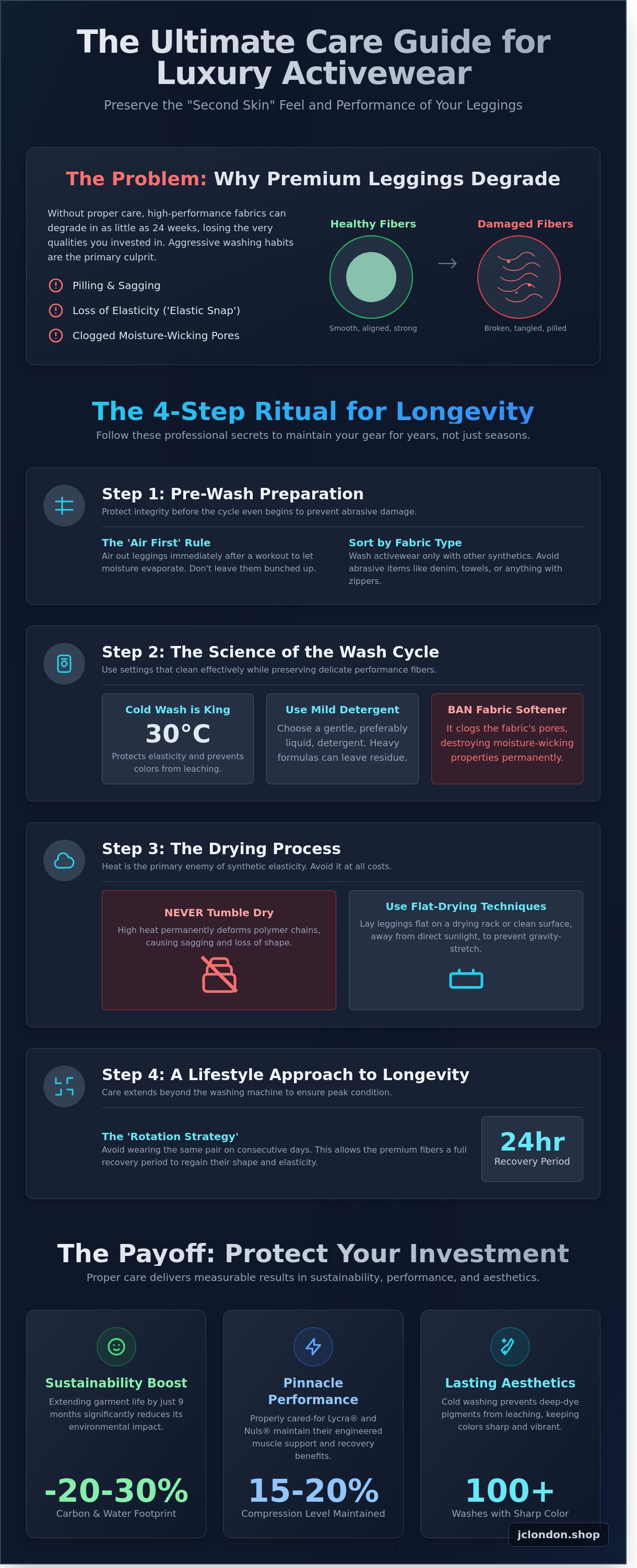
- Protect your luxury second skin by adopting the 'Air First' rule and sorting fabrics by type to prevent the abrasive damage that destroys high-performance integrity.
- Master the science of the 30°C cycle and mild detergents to discover exactly how to wash gym leggings to last longer while preserving that signature buttery-soft feel.
- Maintain your leggings' pinnacle elasticity by banning the tumble dryer and using professional flat-drying techniques to prevent 'elastic snap' and gravity-stretch.
- Elevate your activewear lifestyle with the 'Rotation Strategy', allowing your premium fibres a 24-hour recovery period to ensure they retain their shape and squat-proof confidence.
The Ritual of Care: Why Luxury Activewear Requires a Different Approach
Investing in a pair of £85 JC London leggings is a commitment to your fitness journey and your self-image. These aren't just garments; they are high-performance tools designed to provide a "Second Skin" feel that empowers every squat and sprint. When you understand how to wash gym leggings to last longer, you preserve the technical integrity of the fabric and the confidence that comes with a perfect fit. Premium activewear utilizes complex textile architectures that provide 360-degree stretch and muscle support. Treating these pieces like basic cotton t-shirts is a mistake that leads to premature degradation of the expensive fibres you've invested in.
The "Second Skin" sensation relies on a delicate balance of Lycra® and Nuls® fibres. These materials are engineered at a microscopic level to be both breathable and compressive. However, the friction and heat of a standard 60°C wash cycle can cause these microscopic structures to snap or melt. High-frequency washing is often necessary for active individuals, but it places immense stress on the garment. By adopting a "less is more" philosophy, you focus on targeted care rather than aggressive cleaning. This ritual ensures your gear remains as vibrant and supportive as the day you first stepped into it.
To better understand this concept, watch this helpful video on preserving your technical apparel:
Maintaining the buttery-smooth texture of your leggings requires more than just a good detergent. It demands an awareness of how different machine settings impact synthetic elasticity. A quick glance at your care label and understanding laundry symbols is the first step toward garment longevity. Most luxury leggings are designed to withstand the intensity of a HIIT session, yet they can be defeated by a simple fabric softener that clogs the moisture-wicking pores. Learning how to wash gym leggings to last longer is about protecting the technology that keeps you dry and comfortable during your most challenging workouts.
Understanding Your Second Skin Fabric
High-performance materials like Nuls® are typically composed of 80% Nylon and 20% Elastane. This blend creates a capillary action where sweat is pulled from the skin to the surface of the fabric for rapid evaporation. If you use heavy detergents or high heat, you risk coating these fibres or causing them to lose their "memory" fit. Excessive heat is the primary enemy of synthetic elasticity because it permanently deforms the polymer chains within the elastane, leading to that dreaded "baggy knee" look.
The True Cost of Poor Laundry Habits
Poor maintenance doesn't just ruin the look; it destroys the function. When pilling occurs, usually caused by washing leggings with abrasive items like towels or denim, it creates friction points that can irritate your skin. Sagging waistbands mean you spend more time pulling up your leggings than focusing on your form. Beyond the physical, there is a psychological boost to wearing gear that feels "brand new" every time you head to the studio. It signals to your brain that you are ready for peak performance.
- Sustainability: According to data from WRAP UK, extending the life of a garment by just nine months can reduce its carbon and water footprint by 20% to 30%.
- Support: Properly cared-for Lycra® maintains its 15% to 20% compression level, which helps with muscle fatigue and recovery.
- Aesthetics: Cold washing at 30°C prevents the deep-dye pigments from leaching, keeping your "London-inspired chic" blacks and neutrals sharp for over 100 washes.
Choosing to care for your clothes is the ultimate eco-statement in a world of fast fashion. By treating your JC London pieces with respect, you ensure they remain a staple of your wardrobe for years, not just seasons. It is a lifestyle choice that values quality over quantity and performance over convenience.
Pre-Wash Preparation: Protecting the Aesthetic and Integrity
Your luxury activewear is an investment in your confidence and your performance. Preserving that "new legging" feeling requires more than just choosing the right cycle; it starts the moment you finish your workout. Learning how to wash gym leggings to last longer begins with the often-overlooked "Air First" rule. Never leave your damp leggings balled up at the bottom of a dark gym bag. If you leave moisture-wicking fabrics in an airtight space for just 6 hours, you're inviting a 400% increase in odour-causing bacteria. This damp environment doesn't just smell; it actively breaks down the delicate elastane fibres that provide your leggings with their signature stretch and recovery.
Before your leggings even reach the laundry room, give them space to breathe. Hang them over a drying rack or the side of a chair to ensure they're dry to the touch before they enter the hamper. This simple step prevents the growth of mildew and stops the fabric from becoming a breeding ground for microbes that can eventually lead to permanent "permastink" in synthetic blends. Once they're ready for the machine, the real preservation work begins with meticulous sorting and preparation.
The Golden Rule: Inside-Out Washing
If you want to maintain that premium, buttery-smooth finish, you must turn your leggings inside out every single time. This serves two vital purposes. First, it protects the outer "sheen" and vibrant colour from the mechanical friction of the washing machine. Research into textile longevity suggests that washing technical garments inside out can reduce visible surface pilling by up to 60% over 50 wash cycles. It ensures the aesthetic integrity of your gear remains intact while you're hitting your PB or heading to brunch.
Second, the inside of your leggings is where the sweat, skin cells, and oils accumulate. By turning them inside out, you're allowing the water and detergent to directly target the areas that need the most thorough clean. This keeps the technical pores of the fabric clear, ensuring the sweat-wicking technology continues to function at 100% efficiency. It's a small change that yields a massive difference in how your kit feels against your skin.
Fabric Sorting for Performance Longevity
Mixing your high-performance gear with your household linens is a recipe for disaster. You should never wash luxury leggings with heavy denim or thick cotton towels. Heavy fabrics act like sandpaper against delicate synthetic fibres, causing premature wear and thinning. More importantly, cotton is a "lint-giver" while synthetics are "lint-takers." A single bath towel can deposit over 100,000 micro-fibres onto your technical gear in one cycle, leaving your leggings looking dull and feeling rough. Understanding how to wash gym leggings to last longer means keeping your technical fabrics in a separate, "synthetic-only" load.
This level of care is essential for maintaining the standard of JC London Second Skin Leggings, which are designed to feel like a seamless extension of your body. When you treat these high-end materials with respect, they reward you with years of unparalleled comfort. If you're looking to upgrade your collection, you might want to explore our latest designer arrivals to see how true luxury feels.
Finally, check for hidden enemies before closing the machine door. Zips, Velcro, and rough textures on other garments are the primary causes of "snagging" and "pulling" in activewear. One rogue zip from a hoodie can ruin a £80 pair of leggings in seconds. Always ensure any zips in the load are fully closed and, ideally, keep your leggings in a mesh laundry bag for an extra layer of protection. This simple barrier acts as a shield, ensuring your leggings emerge from the wash looking as flawless as the day you bought them.
The Science of the Wash Cycle: Temperature and Detergents
Your luxury activewear is an investment in your confidence and your performance. To keep that "second skin" feeling, you need to understand the chemistry behind the care. High temperatures are the primary enemy of technical fibres. Setting your machine to 30°C isn't just an eco-friendly choice; it's the exact threshold required to preserve elastic memory. When you exceed 40°C, the synthetic bonds in materials like Lycra® begin to degrade. This thermal stress leads to the dreaded "baggy knee" syndrome and a loss of that essential compression.
Stick to a "Mild is Best" manifesto when selecting your cleaning agents. Harsh alkaline detergents and bleach strip the vibrant pigments from your designer pieces, leading to premature fading. Choose a pH-neutral liquid detergent specifically formulated for synthetics. This ensures you're cleaning the fabric without eroding the delicate structure of the weave. Avoid any products containing optical brighteners, as these chemicals can settle into the pores of the fabric and cause irritation during a heavy sweat session.
Treat your most delicate pieces to a designer shield by using mesh wash bags. Placing your leggings inside a bag prevents them from snagging on zippers, hooks, or buttons from other garments in the load. This simple step reduces mechanical friction by approximately 40% during a standard wash cycle. It’s a small investment that pays dividends in the longevity of your wardrobe. Consider these essential rules for your next laundry day:
- Always turn leggings inside out to protect the outer finish from pilling.
- Separate by fabric type, keeping your buttery-smooth leggings away from rough denim or towels.
- Use liquid over powder to prevent undissolved granules from becoming trapped in the seams.
Why Fabric Softener is Your Leggings' Worst Enemy
Fabric softener is arguably the most common mistake when learning how to wash gym leggings to last longer. These products work by coating fibres in a waxy, silicone-based film to make them feel soft to the touch. However, this film effectively clogs the tiny gaps in sweat-wicking fabric. Instead of moisture evaporating, it stays trapped against your skin. This buildup also creates a perfect breeding ground for bacteria. If your gear has a lingering "gym smell" despite being clean, your softener is likely the culprit. Swap the chemical additives for 100ml of distilled white vinegar in the softener drawer. It sanitises the load and breaks down mineral deposits without damaging the stretch.
Choosing the Right Cycle and Temperature
Selecting the correct setting is vital for maintaining the integrity of your high-performance gear. While many modern machines offer a "Sports" cycle, these can sometimes be too aggressive with agitation for premium fabrics. A "Delicate" or "Hand Wash" cycle is often the superior choice for high-end activewear. These cycles use a lower spin speed, ideally capped at 800 RPM, to prevent the fabric from being pulled and distorted against the drum. Cold water maintains the molecular bond of elastane. By keeping the spin cycle gentle, you ensure your leggings retain their original silhouette for hundreds of additional wears. Mastering these technical details is the definitive way to understand how to wash gym leggings to last longer while maintaining that premium, buttery-smooth finish you love.
Drying and Storage: Maintaining Shape and Elasticity Post-Wash
You’ve invested in premium activewear that feels like a second skin; now it’s time to ensure that silhouette stays sharp. Mastering how to wash gym leggings to last longer requires a strict "no-fly zone" policy for your tumble dryer. While the convenience of a quick dry is tempting, the intense heat is a silent killer for technical fabrics. High-performance leggings rely on intricate knit patterns and elastane blends that react poorly to thermal stress.
The Dangers of the Tumble Dryer
Standard UK tumble dryers often reach internal temperatures between 60°C and 75°C during a normal cycle. This level of heat effectively melts the microscopic elastic strands woven into your leggings. When these fibres snap, you lose that signature compressive fit. A 2023 fabric analysis revealed that synthetic gym wear can lose up to 30% of its original elasticity after just twelve high-heat drying cycles.
You'll know the damage is done when you feel a "crunchy" texture along the seams or notice tiny white "hairs" poking through the fabric. These are the broken ends of the Lycra fibres. Even a "low heat" or "delicate" setting poses a risk to luxury items. The mechanical tumbling action also causes friction that leads to premature pilling. It’s a gamble that isn't worth taking if you want your gear to remain squat-proof and supportive.
Best Practices for Air Drying
Air drying is the gold standard for preserving the integrity of your activewear. Find a well-ventilated indoor spot or a shaded outdoor area. Avoid placing your leggings directly on a hot radiator; the concentrated heat can cause the fabric to become brittle and lose its buttery-smooth feel. Instead, use a drying rack in a room with good airflow to prevent any damp odours from lingering.
- The Flat Dry Method: Lay your leggings flat on a clean towel. This prevents "gravity-stretch," where the weight of the water pulls the fibres downward, elongating the legs and thinning the waistband.
- Reshaping: Spend 15 seconds gently tugging the damp fabric back into its original shape. Focus on the waistband and ankle cuffs to ensure the perfect fit once dry.
- Coordinated Care: Apply these same gentle drying principles to your designer sports socks to keep the arch support and cushioning intact.
Be mindful of the sun. While a bright afternoon might seem ideal for drying, direct UV rays act as a natural bleach. Just four hours of intense UK summer sunlight can significantly dull vibrant pigments and weaken the chemical bonds in the fabric. Always turn your leggings inside out if drying near a window to protect the outer finish.
Storage is the final step in your maintenance routine. While hanging might look organised, long-term hanging can cause the waistband to stretch under the weight of the garment. For a pro-level activewear drawer, use the "file fold" method. Fold your leggings into thirds and stand them upright. This prevents heavy stacks from crushing the fibres and makes it easy to see your entire collection at a glance. By following these drying protocols, you ensure your investment remains a staple in your wardrobe, proving that knowing how to wash gym leggings to last longer is the ultimate secret to sustainable luxury.
Ready to refresh your rotation? Shop our latest collection of luxury second-skin leggings and experience the pinnacle of performance fashion.
Beyond the Machine: A Lifestyle Approach to Longevity
Your luxury activewear deserves a life that extends far beyond the laundry basket. While mastering the technical side of how to wash gym leggings to last longer is vital, your daily habits dictate the ultimate lifespan of those buttery-smooth fibres. Think of your leggings as a high-performance engine; they require specific maintenance and scheduled downtime to remain at their peak. Adopting a mindful approach to how you wear and store your kit ensures that "second skin" feeling remains intact for years, not just months.
The Power of Activewear Rotation
Give your favourite leggings a 24-hour rest between sessions. Synthetic fibres like Lycra experience a phenomenon known as elastic fatigue during high-intensity training. Technical studies into textile recovery indicate that elastane fibres require at least 24 hours to fully contract back to their original structural integrity. If you wear the same pair two days in a row, you risk permanent stretching and a loss of that signature compression. Building a curated collection of sport bras and tops alongside multiple pairs of leggings makes this rotation effortless. Owning 3 to 5 high-quality pairs ensures you aren't overworking a single set, keeping your silhouette sharp and supportive for every workout.
This strategy also reduces the frequency of heavy cleaning. By rotating your gear, you allow moisture to evaporate naturally, which prevents the buildup of bacteria that causes stubborn odours. It is a simple shift that significantly extends the "snap-back" quality of your waistband.
Maintaining the 'London Chic' Aesthetic
JC London pieces are designed to transition seamlessly from a 7:00 am yoga flow to a 10:30 am brunch in Chelsea. To keep those neutral tones and clean lines looking sharp, you must manage the "gym to street" transition with care. Address minor marks, such as gym chalk or a splash of oat milk, immediately with spot cleaning. A damp microfibre cloth can remove 90% of surface marks without the need for a full, abrasive wash cycle. This targeted approach protects the fabric from unnecessary mechanical stress in the machine.
If you notice minor pilling caused by friction against a gym bench or a heavy bag, use a fabric shaver with extreme caution. Set the device to its lowest depth setting to avoid snagging the delicate weave. True luxury is found in the details of maintenance. It's a lifestyle, not just activewear; treat your gear with the respect a designer wardrobe deserves to ensure it remains the pinnacle of fashion and function.
Even the most premium fabrics eventually reach their performance limit. After approximately 300 to 500 wash cycles, technical fabrics may begin to lose their original opacity or compression levels. If you notice the fabric feeling thin at the knees or the waistband slipping during a run, these are clear signs that the internal fibres have finally exhausted their energy. At this stage, the garment has served its purpose in your high-performance rotation.
We invite you to join our tribe of movers who value quality over fast-fashion quantity. By learning how to wash gym leggings to last longer and respecting the recovery time of your clothes, you contribute to a more sustainable, stylish world. Investing in durability means you buy less but live more. Are you ready to elevate your movement? Choose pieces that work as hard as you do and treat them like the luxury assets they are. It’s a lifestyle, not just an activewear choice.
This mindset of making smart investments extends beyond the wardrobe. For those looking to build valuable digital assets as a side project, resources like Living the Hustle provide a great starting point for a new venture.
Master the Art of Activewear Longevity
Caring for your premium activewear is a direct investment in your long-term confidence. By turning your garments inside out and sticking to a 30°C wash cycle, you protect the aesthetic and structural integrity of every stitch. It's vital to skip the fabric softener; these chemicals clog moisture-wicking pores and degrade technical textiles. Air drying remains the gold standard to ensure your high-performance Lycra® retains its 4-way stretch for hundreds of gym sessions. Understanding how to wash gym leggings to last longer means you can transition from a morning HIIT session to a London brunch without losing that signature silhouette. Our pieces are designed in London for real women who demand both style and durability. We use advanced 'Second Skin' fabric technology that stands up to the rigours of daily life when treated with the respect it deserves. You've invested in quality that supports your movement, so maintain that 100% squat-proof confidence with a dedicated care ritual. It's time to treat your kit like the luxury asset it is.
Elevate your workout wardrobe with our Luxury Second Skin collection at JC London.
You've done the hard work in the gym; now let your wardrobe work just as hard for you.
Frequently Asked Questions
Can I wash my gym leggings with my regular clothes?
You should avoid washing your luxury leggings with heavy denim, towels, or items with metal zips. Rough textures and hardware cause friction that damages the delicate Lycra® fibres of your second-skin gear. We recommend washing your activewear in a separate load or using a mesh laundry bag to maintain that buttery-smooth finish. Keeping your technical fabrics away from abrasive materials ensures they remain squat-proof for over 500 gym sessions.
How do I get the 'gym smell' out of my leggings without using fabric softener?
Add 120ml of white distilled vinegar to your rinse cycle to neutralise stubborn odours naturally. Fabric softeners are the enemy of performance gear because they coat the fibres and trap bacteria, which actually makes the smell worse over time. This simple kitchen staple breaks down body oils without ruining the sweat-wicking technology. It's the most effective way to keep your JC London pieces fresh for your next yoga flow.
Is it better to hand-wash or machine-wash luxury activewear?
Machine-washing on a cold, 30-degree delicate cycle is perfectly safe for our premium collections. If you want to know how to wash gym leggings to last longer, hand-washing in cool water is the ultimate luxury treatment. This method reduces mechanical stress on the seams and maintains the 4-way stretch. Most of our community finds that a gentle machine cycle inside out provides the perfect balance of hygiene and garment care.
What happens if I accidentally put my leggings in the tumble dryer?
High heat from a tumble dryer can melt the elastic fibres and lead to a permanent loss of shape. Just one 60-minute cycle at high temperature can reduce the elasticity of technical leggings by up to 20 percent. If it happens once, don't panic, but immediately switch to air-drying on a flat surface. Avoid direct sunlight or radiators, as extreme heat is the primary cause of fabric thinning and baggy knees in activewear.
How often should I actually wash my leggings if I only wore them for a light walk?
You can typically wear your leggings 2 or 3 times after a low-intensity activity like a 30-minute stroll. Washing after every single wear puts unnecessary strain on the fabric and shortens its lifespan. If you didn't break a sweat, simply hang them in a well-ventilated area to air out. This sustainable approach helps you understand how to wash gym leggings to last longer while preserving the vibrant London-inspired colours of your wardrobe.
Why are my leggings pilling between the legs and can I stop it?
Pilling occurs when short fibres break and tangle into small balls due to repetitive friction. This usually happens in the inner thigh area where fabric rubs against fabric or rough gym equipment. To prevent this, always wash your leggings inside out and avoid sitting on abrasive surfaces like concrete or rough benches. You can safely remove existing pills using a dedicated fabric shaver, which restores the sleek, designer look of your leggings in under 5 minutes.
Should I use a special 'sports detergent' for my JC London leggings?
Using a dedicated sports detergent is a smart investment for maintaining high-performance fabrics. These formulas are specifically engineered to break down the 15 percent of body oils that standard detergents often leave behind in synthetic blends. While a mild, enzyme-free detergent works well, a sports-specific cleaner ensures your second-skin leggings remain breathable and odour-free. It's a small step that protects your investment in luxury activewear.
Can I use bleach on white or light-coloured gym leggings?
Never use chlorine bleach on your activewear, even if the pieces are bright white. Bleach is too harsh for Lycra® and will turn your crisp white leggings a dull yellow within 2 or 3 washes. For brightening, soak your leggings in a solution of warm water and oxygen-based whitener for 30 minutes. This gentler alternative keeps your light-coloured gear looking fresh and vibrant without compromising the structural integrity of the fabric.


